Table of Content
The Boat Builders depicts two boys perched upon a rocky outcropping by the sea. Perhaps envisioning themselves as future mariners, the pair is deeply engrossed in constructing their toy sailboats. Homer has surrounded the boys with various nautical accoutrements such as a beached dory tethered to a large anchor and a passing sailboat purposefully located on the horizon between the two figures, again hinting at their likely professions. The buoyant spirit of the work--depicting two boys whiling away the hours in hazy sunlight--is highly characteristic of Homer's best Gloucester works.

Inspired by African and Iberian art, he also contributed to the rise of Surrealism and Expressionism. Picasso’s sizable oeuvre grew to include over 20,000 paintings, prints, drawings, sculptures,ceramics, theater sets, and costume designs. He painted his most famous work, Guernica , in response to the Spanish Civil War; the totemic grisaille canvas remains a definitive work of anti-war art. At auction, a number of Picasso’s paintings have sold for more than $100 million.
The Boat Builders, 1873 by Winslow Homer
In 1873, the year he executed The Boat Builders, Homer had immersed himself in the daily life of the small fishing town located north of Boston, on the coast of Massachusetts. Concentrating his efforts on genre scenes, Homer recorded the habits and routines of the townspeople, but more than anything else, he turned to the children of the area as his subjects. Their youthful innocence inspired Homer to produce some of the most poignant works of his career. Arthipo offers you only artistic canvas prints, reconstructed canvas works, similar to the original works, and the paintings are carefully prepared with aesthetic criteria in mind, then studied artistically by professional painters.
We Are Committed to Excellence, with 15 Years Experience In Curating and Providing Quality Craftsmanship in our Reproductions. AutoCheck® vehicle history reports deliver information on reported accidents, odometer rollback, lemon vehicles, branded titles and much more. The artwork was acquired by the IMA with funds from the Martha Delzell Memorial Fund. The Boat Builders is currently on location at the IMA's Paine Turn of the Century American Art Gallery.
The Boat Builders
A man of multiple talents, Homer excelled equally in the arts of illustration, oil painting, and watercolor. Many of his works—depictions of children at play and in school, farm girls attending to their work, hunters and their prey—have become classic images of 19th-century American life. Others speak to more universal themes such as the primal relationship of man to nature. Winslow Homer was the most down-to-earth visual interpreter of American life in the 19th century. During the Civil War, he was sent to the front as an artist-correspondent for Harper's magazine, and his sketches of battle scenes gave readers a close-up view of Americans at war.

During the last decade of his life, Homer made four visits to Florida. An avid angler, he spent much of his time on these trips fishing rather than painting. He declared the fishing in Homosassa, located off the Gulf of Mexico, “the best in America.” Many of the Homosassa watercolors, such as this one, depict the black swath of jungle just beyond the waters where Homer and others fished. The Florida pictures of 1903 to 1905 would be Homer’s final series of watercolors. Homer spent several months during the summer and late fall of 1878 at Houghton Farm, the country residence of a patron in Mountainville, New York.
Poster Prints
He exhibited at the National Academy of Design in 1860 and was elected a member in 1865. During a stay in France in 1866, he was attracted to French naturalism and Japanese prints, but they had little effect on his generally bright and happy work. He became a master of watercolour and his ability as an oil painter matured; he focused increasingly on solitary, withdrawn figures. He spent 1881 – 82 in the English village of Tynemouth, on the North Sea, where the coastal atmosphere, the sea, and the stoic people are the subjects of some of his most powerful images. In 1883 he moved permanently to Prouts Neck, and his dominant theme became the sea and the endless struggle against an uncaring nature. In his later years he continued to paint vigorously and in near-total isolation.

In scenes of sun-drenched harbors and shores, Homer often left parts of the white paper exposed to give a sense of the brilliant atmosphere. He painted at least 19 watercolors in Bermuda, a place he visited twice beginning in 1899. He believed them to be “as good work...as I ever did.” They reveal—especially in their fluid washes—the consummate mastery of the medium that Homer had achieved by this point in his career.
The studied elegance of the work’s design derives in part from its monochromatic palette and in part from the geometric patterning found in the bands of color in the background, the checkered apron, and the marks on the board. The whole boat trip was good, the weather was nice and it was a great relaxation tour. Though there are few things that could be improved - smoking should be allowed at one particular place as non-smoking passengers are not comfortable with smokers freely lightning a cigarette in the crowded boat upstairs. The guiding in English was not loud enough and it was after German guiding tips - meaning that we already passed that particular place and it was uneasy to understand about which building is the guide speaking about. In the meantime, here are feedback posts from our past customers sharing their shopping experience. The largest one, nasal-shaped, is a mirror-version of the small rock in the foreground but there are others.
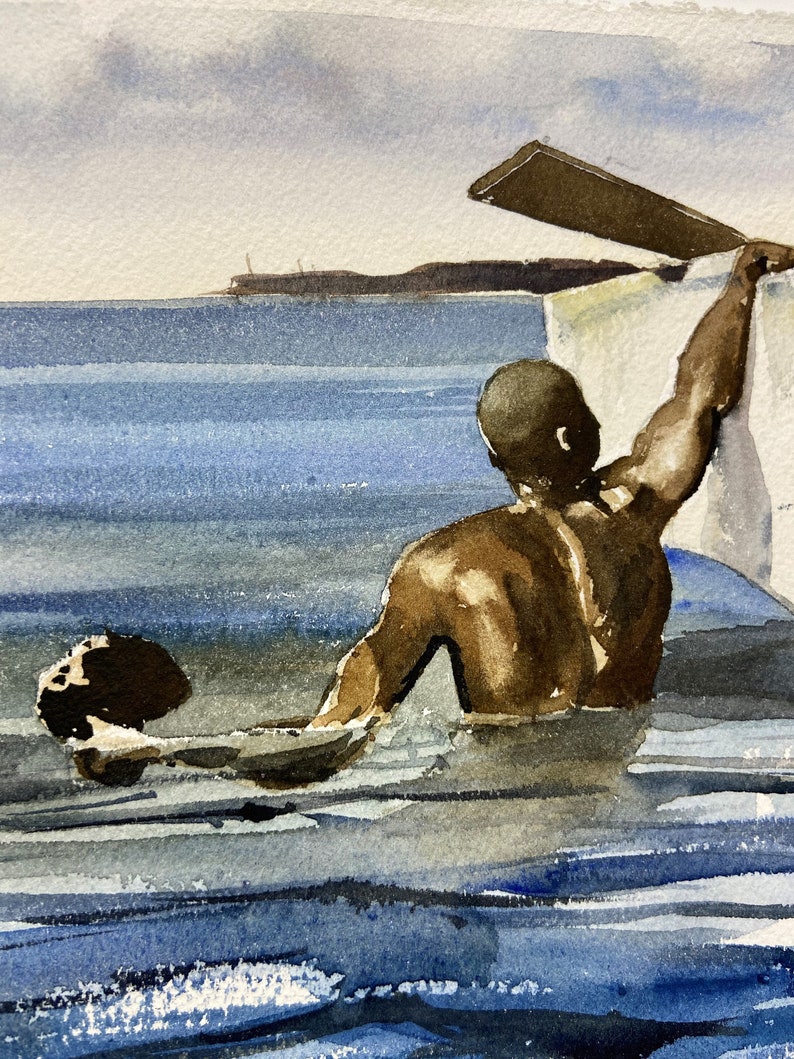
The model was a local woman named Ida Meserve Harding, who had earlier posed for him. Something has caught the woman's attention, causing her to stop midstride and look back over her shoulder—perhaps a sound raised by whatever has caused the gull to rise from its roost and soar away. Suggesting that the viewer, too, follow her glance, Homer makes the picture’s narrative focus a point just beyond the right edge of the scene. Homer revisited the theme of two women mending fishing nets, seen in his 1882 watercolor, in this 1888 etching.
The girl in this work appeared previously in a drawing, an oil painting, and two watercolors. More generally, she is related to the manysolitary figures of womenthat appear in Homer’s work, especially during the 1870s, including A Sick ChickenandFresh Eggs. In 1873 Homer spent his summer in Gloucester, Massachusetts, which is where he painted The Boat Builders, as well as other works in his series of drawings and paintings about shipbuilding. The connection of the boys' toy boats and the sailing ship was sought to intertwine the imagination of the boys with the real-life experience of fishermen. It is believed that the boys' hobby suggests their future role in the ship, sea and fishing industries.
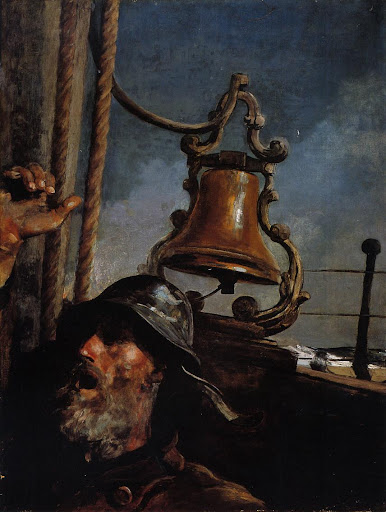
Homer drew upon his experience of the war to create his first oil paintings, many of them scenes of camp life that illuminate the physical and psychological plight of ordinary soldiers. He received national acclaim for these early works, both for the strength of his technique and the candor of his subjects. From the late 1850s until his death in 1910, Winslow Homer produced a body of work distinguished by its thoughtful expression and its independence from artistic conventions.



No comments:
Post a Comment